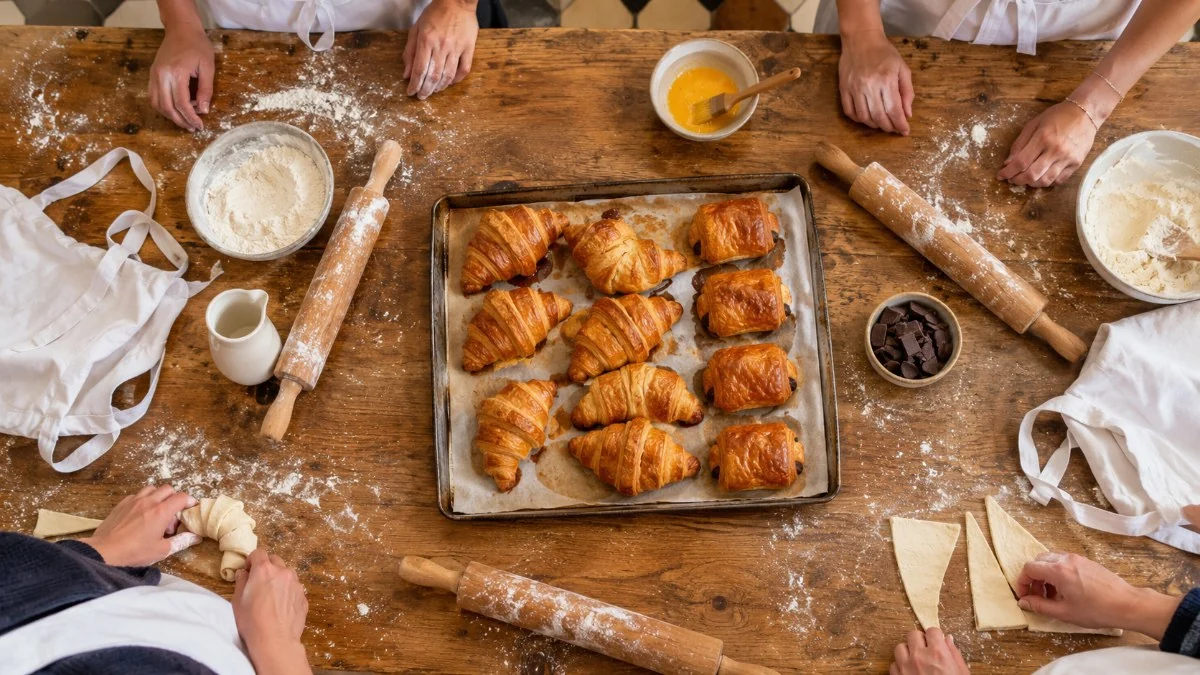
Booking choice: The croissant class with a chef, from $137 per person. Check dates Class details
Order "un croissant" in Paris and you may get the cheaper one. Ask for a croissant au beurre and you pay a little more for butter. That was the whole story until butter got expensive. Then some bakers started laminating with a blend that is mostly vegetable oil and water.
Here is what the warning said, what butter prices have done since, and the few words of French that get you the real thing.
The quick answer
A croissant au beurre is made with butter; an ordinaire is usually made with other fats and costs about 20 centimes less. In July 2025 Paris baker Matthieu Bijou warned in Le Parisien that some shops use a pseudo-butter with at most 25% real butter, at about €7/kg against up to €12.60/kg for butter. Wholesale butter has since fallen to about €4,200 a tonne. The only reliable test is to ask.
What is the difference between a croissant au beurre and a croissant ordinaire?
The fat. A croissant au beurre is laminated with butter. An ordinaire is usually made with margarine or another cheaper fat and costs about 20 centimes less.
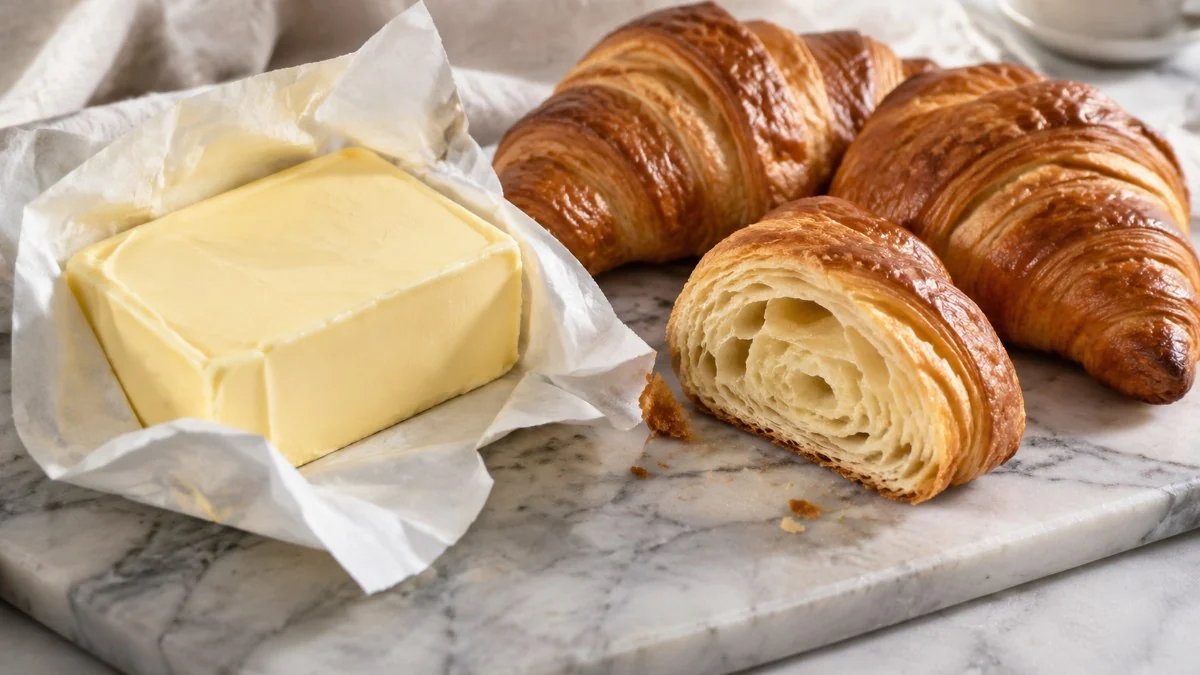
Most boulangeries sell both, side by side, and the price gap is small: around 20 centimes, according to The Local. Butter matters more in a croissant than in almost anything else on the counter. Dominique Anract, president of the CNBPF, told AFP that butter makes up "près de la moitié dans le feuilletage", nearly half of the laminated dough (Boursorama/AFP, January 2025).
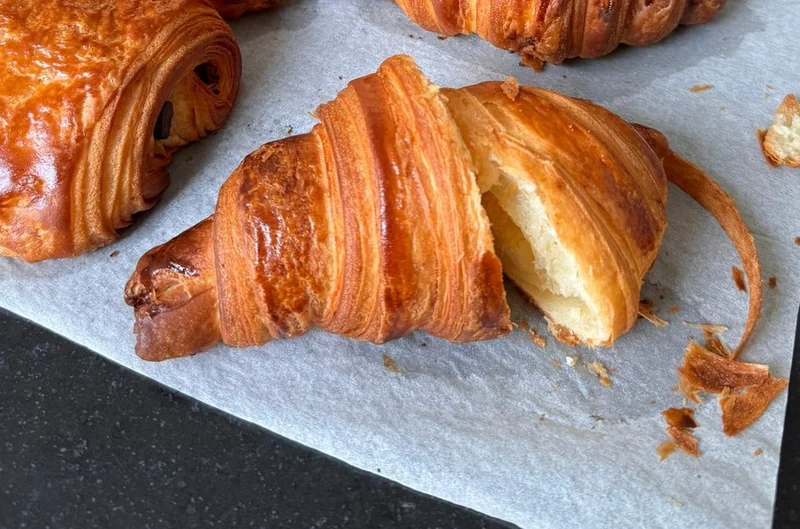
There is a Paris habit of shaping butter croissants straight and ordinaires curved. Treat it as a hint, not a rule. Plenty of bakeries shape both the same way.
| Croissant au beurre | Croissant ordinaire | Pseudo-butter croissant | |
|---|---|---|---|
| Fat used | Butter | Margarine or other fat | Blend, at most 25% butter |
| Fat cost (2025) | Up to €12.60/kg | Varies | About €7/kg |
| Price at the counter | About 20 centimes more | The cheaper one | Sold at butter price |
| Easy to spot? | Ask | Ask | "Almost impossible" (Bijou) |
What was the 2025 fake butter croissant warning?
In July 2025 Paris baker Matthieu Bijou told Le Parisien that some bakeries laminate with an industrial pseudo-butter: mostly vegetable oils, water and yellow colouring, with no more than 25% real butter.
The Local picked the story up on 24 July 2025. Bijou, a boulanger-pâtissier, described "a butter alternative made mostly of vegetable oils and water and added yellow colourant". It costs about €7 a kilo against up to €12.60 for butter. His point was the price: the substitute now costs about what butter cost five to ten years ago.
The worrying part is his verdict on spotting it. He called it "almost impossible" to tell the difference by eye. His advice, as reported: ask, or expect to pay at least €1.30 for a croissant made with premium ingredients. Bijou did not name any bakery, and neither do we.
Why are croissants more expensive, and what did butter prices do?
Wholesale butter roughly went from €5,500 to over €8,000 a tonne during 2024, stayed above €7,600 in spring 2025, then fell for a year to about €4,200 by late summer 2026.
Butter was the main pressure. Paul Boivin of the bakery companies' federation told AFP in January 2025 that butter had gone "de 5.500 à plus de 8.000 euros la tonne" over the year. In May 2025 Pleinchamp, citing the dairy board CNIEL, reported a new record above €7,600 a tonne for industrial butter.
Then it turned. The dairy update published in September 2026 says industrial butter has stabilised at about €4,200 a tonne after a year of steady decline (Pleinchamp, September 2026). Whether that reaches the price board is up to each baker.
| When | Industrial butter, France | Source |
|---|---|---|
| Start of 2024 | About €5,500 a tonne | FEB via AFP |
| End of 2024 | Over €8,000 a tonne | FEB via AFP |
| May 2025 | Over €7,600 a tonne | CNIEL via Pleinchamp |
| August 2026 | About €4,200 a tonne, stable | Pleinchamp |
How do you know if a croissant is made with butter?
Ask. Then check the smell, the flake and the price. Contest-winning bakeries are a safe bet, because the big contests require AOP butter.
- Ask the counter. "C'est un croissant au beurre ?" gets a straight answer in almost every bakery.
- Read the label. Many shops write "croissant au beurre" and "croissant" on separate tags, with two prices.
- Smell it. Butter has a smell no blend copies well. Judges score aroma for that reason.
- Watch the price. A croissant far below its neighbours on the board is probably the ordinaire.
- Go to a winner. The 2026 Greater Paris and national contests both required Charentes-Poitou AOP butter. See the 2026 winners.
None of these is proof. Bijou's point stands: only the baker knows what went into the fold.
See the butter go in with your own eyes: three hours on croissants with a pastry chef.
Check dates for the croissant class with a chefHow do you ask for a butter croissant in French?
Say "Un croissant au beurre, s'il vous plaît." Add "C'est du beurre ?" if you want to check.
Bakers are used to the question and will not take offence. Keep it short and say bonjour first: in Paris, a request without a greeting lands badly.
| You want to say | In French |
|---|---|
| Hello | Bonjour |
| A butter croissant, please | Un croissant au beurre, s'il vous plaît |
| Is it made with butter? | C'est du beurre ? |
| Two butter croissants | Deux croissants au beurre |
| And a pain au chocolat | Et un pain au chocolat |
What does a croissant class show you about butter?
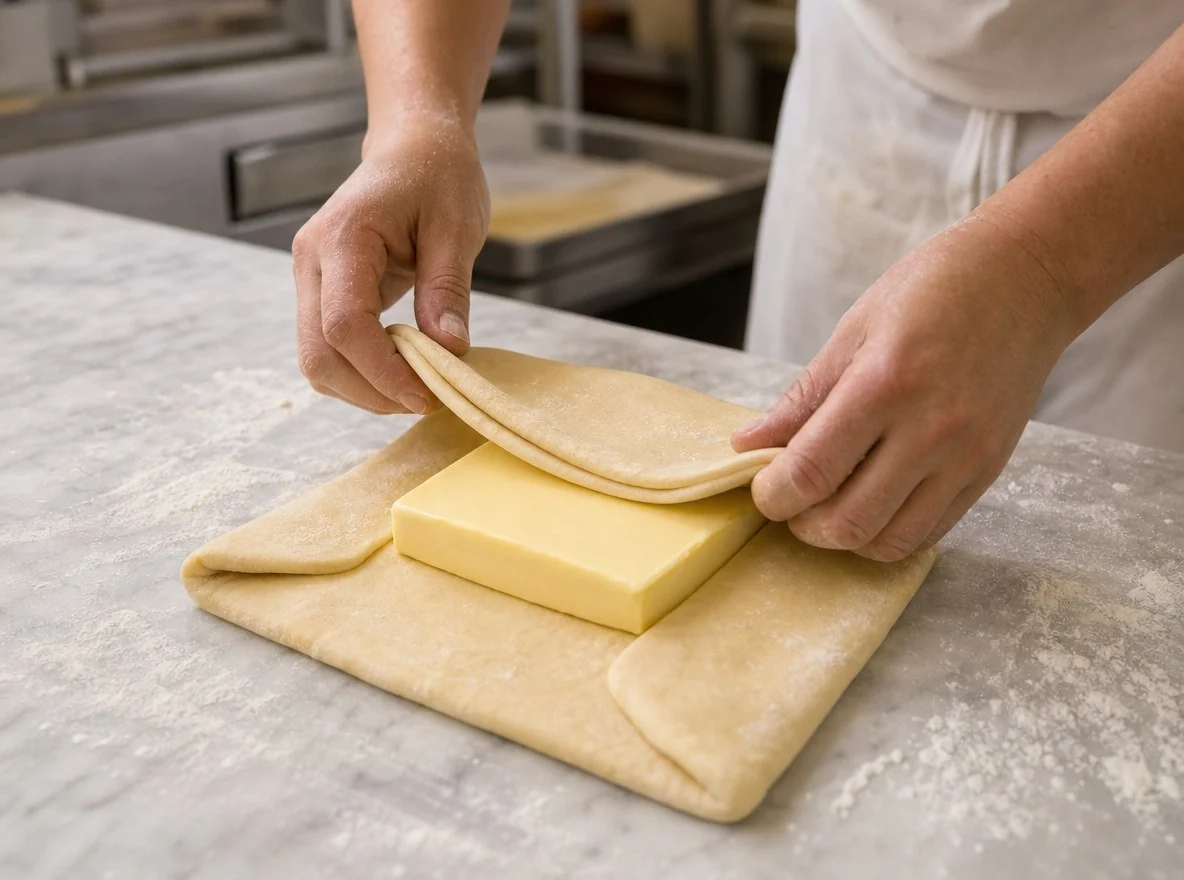
You see the slab go into the dough and learn why it has to stay cold. After that, a croissant made with a cheap blend is easier to notice.
Lamination is the heart of every croissant class we list, and the chef explains what the butter does: the layers, the flake and the smell when the tray comes out. The chef studio class covers butter quality and proofing as part of its three hours. The Latin Quarter class teaches the laminated dough technique for croissants and pains au chocolat.
One honest note: you fold a dough in class and bake one the chef prepared earlier, because a classic croissant takes about two days. The croissant baking guide covers temperatures and timings if you want to try at home.
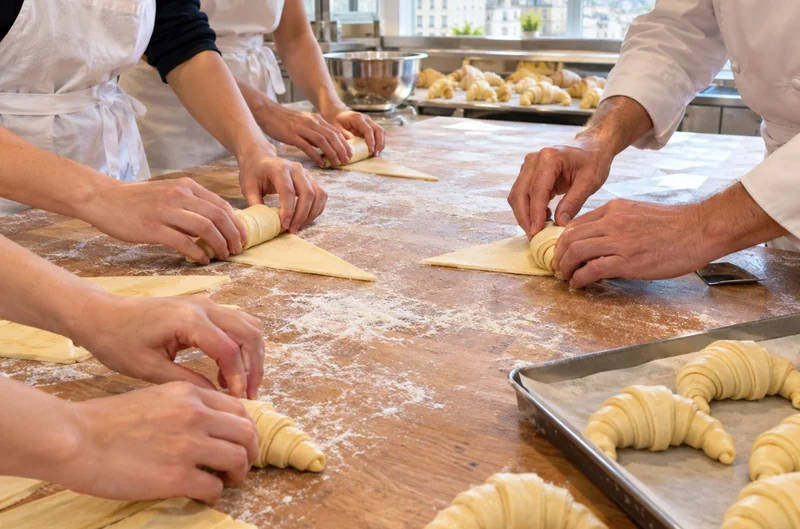
The most-reviewed croissant class in Paris, in a Left Bank pastry school, with a private option.
Explore the Latin Quarter croissant class Class detailsFrequently asked questions
What is the difference between croissant and croissant au beurre?
A croissant au beurre is laminated with butter. A plain croissant, the ordinaire, is usually made with a cheaper fat and costs about 20 centimes less.
Are some butter croissants in Paris made without butter?
In July 2025 Paris baker Matthieu Bijou told Le Parisien that some bakeries use a pseudo-butter with no more than 25% real butter. He did not name shops. Asking is the only sure check.
Is a straight croissant made with butter?
Often, in Paris: many bakers shape butter croissants straight and ordinaires curved. It is a habit, not a law, so ask.
Are butter prices still rising in France?
No. Industrial butter fell for about a year after its 2025 record and was stable at about €4,200 a tonne in the September 2026 dairy update.
Ready to book
Choose your class
Free cancellation up to 24 hours before on every option. Prices are from-prices in USD and move with the season.
Croissant Baking Class with a Chef
- Hands-on class with a pastry chef, in English
- All ingredients and professional equipment
- Bi-colour croissants on selected days (pick that option)
French Croissant Class in the Latin Quarter
- Lamination and shaping with a pastry chef
- Croissants and pains au chocolat to take away
- Ingredients, equipment and an apron
Croissant, Macaron or Tart Class near Montmartre
Six people at most, and you choose the pastry