Booking choice: The croissant class with a chef, from $137 per person. Check dates Class details
Croissant dough is a yeast dough with a slab of butter locked inside and folded into thin layers. In the oven the water in the butter turns to steam and lifts each layer apart. Everything else in the method exists to keep those layers separate until that moment.
We took the figures from two sources that publish full methods: the professional croissant recipe of the Normandy butter maker Elle & Vire, and the home-baking FAQ of Weekend Bakery. Where they differ, we say so.
The quick answer
Bake at 200 °C (390 °F) in a fan oven or 220 °C (430 °F) in a conventional one, and turn it down once they colour. Proof shaped croissants at 24 to 26.5 °C until wobbly, about two and a half hours in a bakery. Use butter with about 82% fat, keep the room below 20 °C, and spread the work over two days.
How do you bake croissants, step by step?
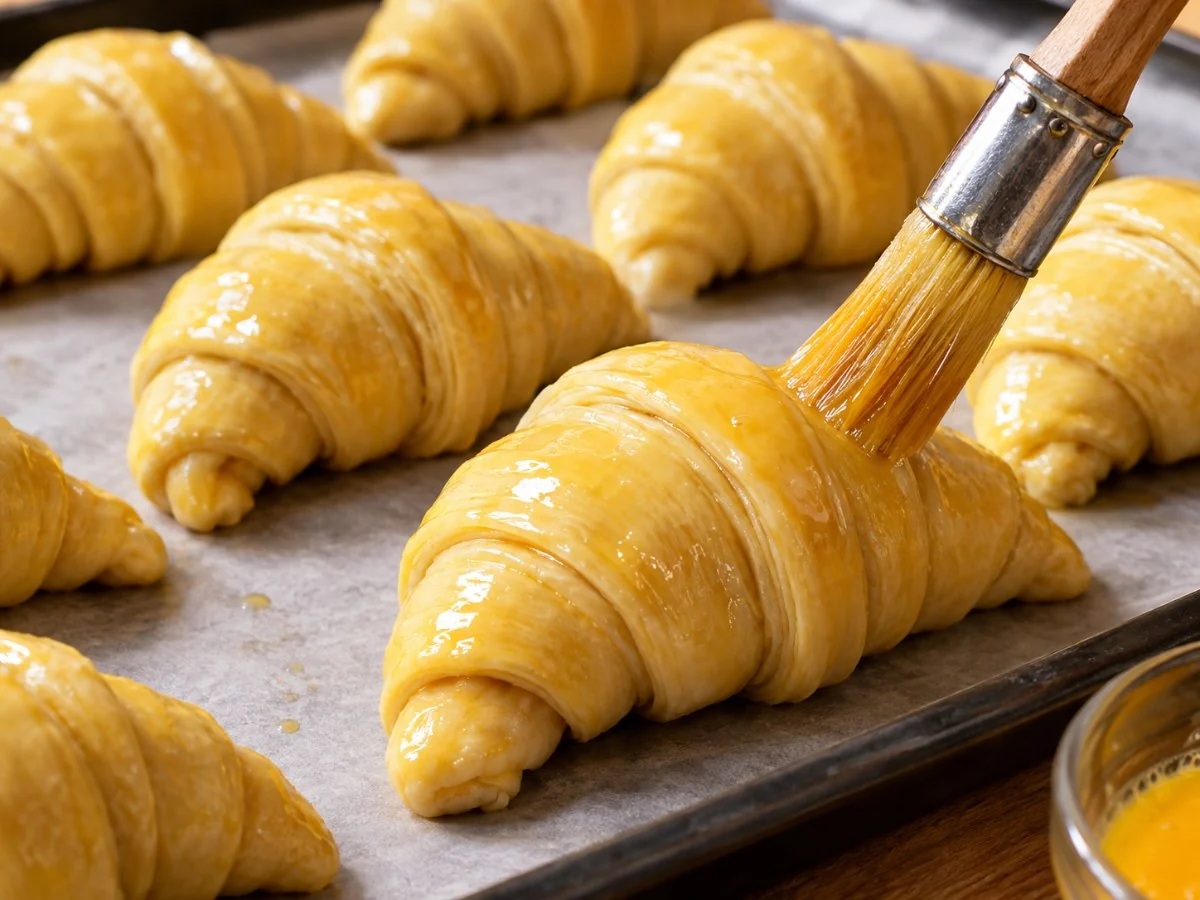
Mix and chill the dough, lock in the butter, give it three folds with rests in between, roll and cut triangles, shape, proof, glaze and bake. Done properly, it takes two days.
Here is the shape of a classic schedule.
| Stage | What happens | Time |
|---|---|---|
| Day 1, morning | Mix the dough (flour, water or milk, sugar, salt, yeast) and chill it | About 12 hours in the fridge before laminating (Weekend Bakery) |
| Day 1, evening | Beat the butter into a flat slab, lock it into the dough, fold | Rest about an hour in the cold after each fold |
| Day 2, morning | Roll to about 2.5 mm, cut tall triangles, shape | With a 30 to 40 minute chill before cutting (Elle & Vire) |
| Day 2 | Proof somewhere warm but not hot | About 2.5 hours at 25 °C (Elle & Vire) |
| Day 2 | Egg wash, bake | 15 to 17 minutes in a deck oven |
Weekend Bakery's own schedule stretches to a third morning for the bake. Bakeries compress it with freezers and proofing cabinets. A class compresses it by baking dough the chef started earlier, which is why no croissant class takes you from flour to oven in one go.
What temperature do you bake croissants at?
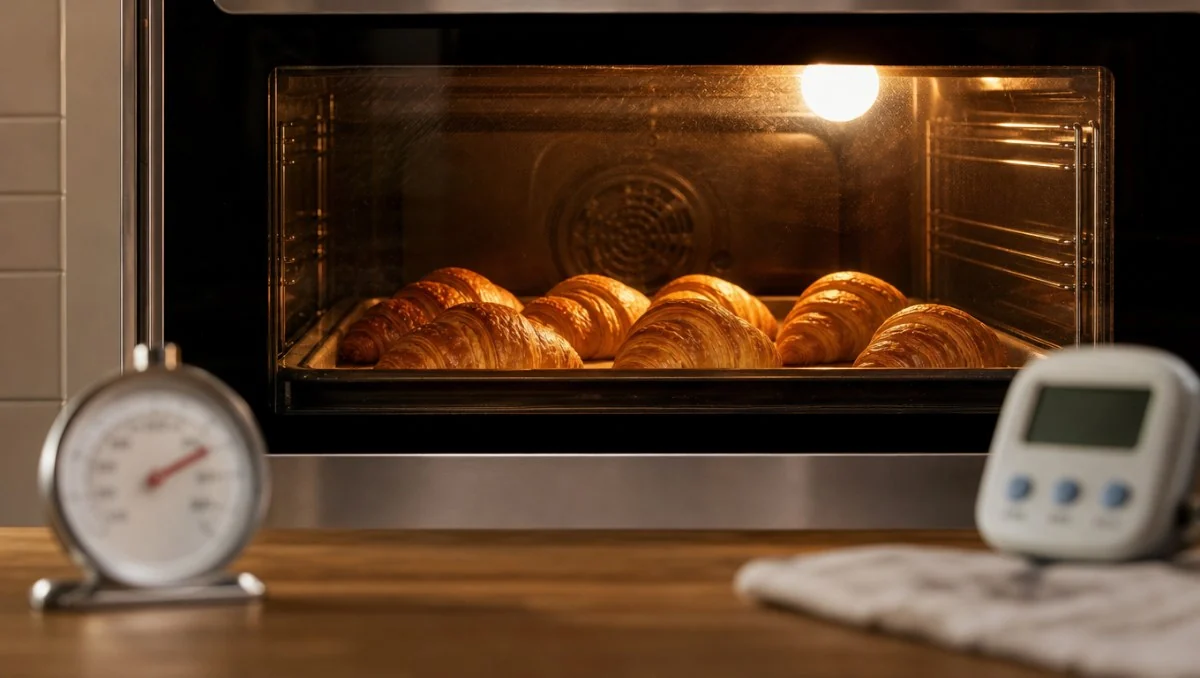
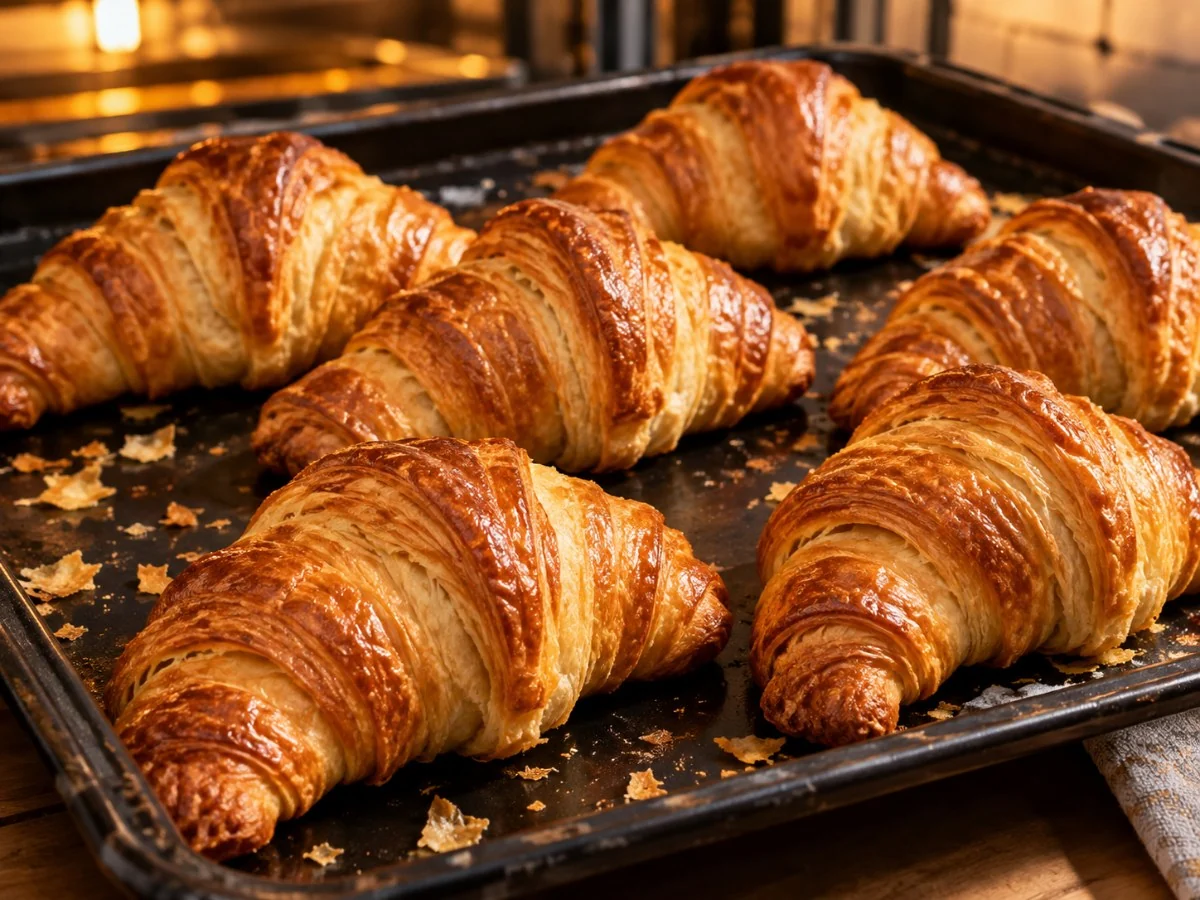
Around 200 °C (390 °F) in a fan oven or 220 °C (430 °F) in a conventional oven, lowered once they start to colour.
Those are Weekend Bakery's preheat figures for home ovens. Professional ovens run a little cooler and faster: Elle & Vire's recipe bakes at 190 to 200 °C for 15 to 17 minutes in a deck oven, or 175 °C for 8 to 12 minutes with a fan. Its target is simple: “nice and golden”.
The other temperatures matter as much as the oven:
- The room: below 20 °C (68 °F) for a first attempt, says Weekend Bakery.
- The proof: 24 to 26.5 °C (76 to 79 °F), draught-free. Warmer and the butter melts out before the oven.
- Reheating: frozen baked croissants revive in about 8 minutes at 175 °C (345 °F).
What is lamination, and how many folds does a croissant need?
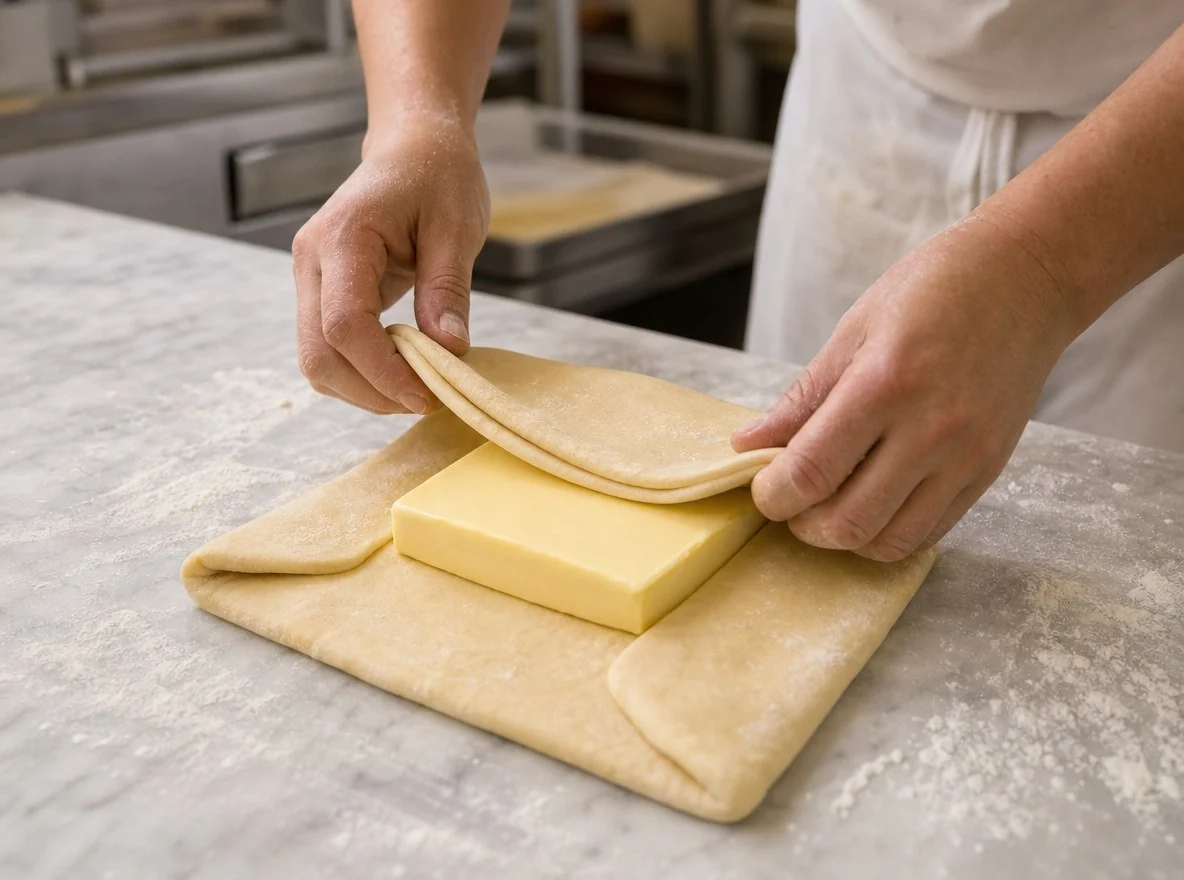
Lamination is folding butter into dough to build layers. The classic French method uses three single folds, which turns one slab of butter into 27 layers.
Each single fold, the letter fold, triples the layers: 3, then 9, then 27. A double fold, the book fold, multiplies them by four. Elle & Vire's professional recipe uses one single and one double, for 12 butter layers and a bolder, more open crumb. Across recipes, croissant dough ends up with 16 to 50 layers of fat.
More folds is not better. Past a point the layers get so thin that the butter merges with the dough and the croissant turns bready. Between folds the dough rests in the cold, about an hour each in the Elle & Vire method, so the gluten relaxes and the butter firms up again.
Which butter and flour make the best croissants?
A dry butter with about 82 to 84% fat, and a medium-strength flour such as French type 55. Wetter butter breaks into pieces during the folds.
Weekend Bakery asks for butter of about 82% fat with low water, because watery butter turns hard and shatters. Professionals use “extra dry” sheets: Elle & Vire's recipe uses 700 g of 84% butter for 1,250 g of flour, so the butter weighs more than half as much as the flour.
For flour, Weekend Bakery prefers French type 55, or a flour of about 11% protein. All bread flour can make the result heavy. In France's croissant contests the butter is fixed: the national final requires Charentes-Poitou AOP butter, supplied by the organisers.
Feel the right butter temperature with a chef beside you: three hours, croissants only.
Check dates for the croissant class with a chefAre croissants the hardest pastry to make?
They are among the hardest, because they punish small temperature mistakes over two days. Macarons are fussier in the mixing; croissants are fussier about time and cold.
Most failures trace back to temperature. Weekend Bakery's list of common faults is worth reading before your first batch:
- Butter pooling on the tray: usually under-proofing, not too much butter.
- Butter breaking into shards during the folds: butter too cold, or too much water in it.
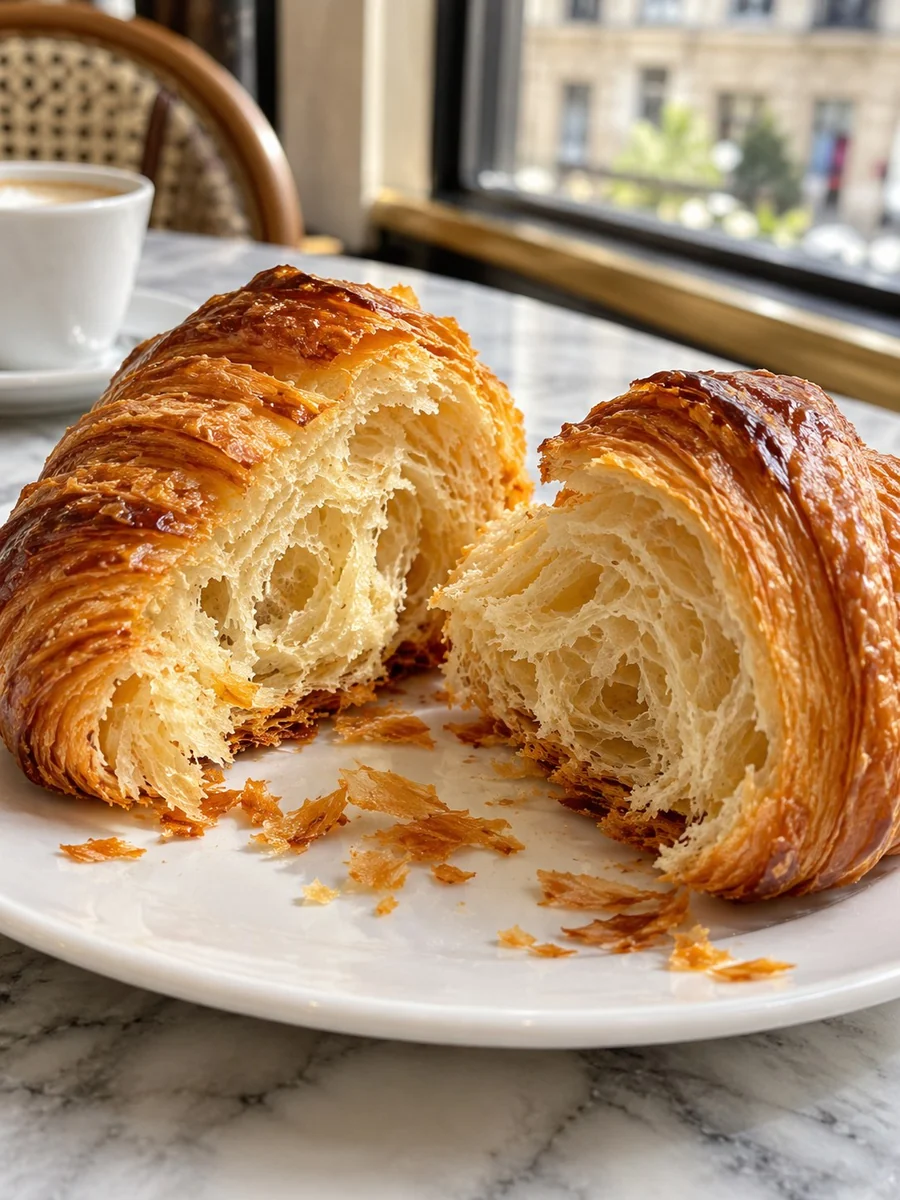
- A bready crumb with no layers: pressing too hard, too long at room temperature, or butter absorbed into the dough.
- Splitting in the oven: weak layering and under-proofing.
- Pale or patchy colour: an oven running off its dial.
Professionals add one more trap: rushing the rests. If the dough fights the rolling pin, it goes back in the fridge for 10 to 20 minutes.
What are the 5 basic baking skills?
Weighing accurately, mixing and kneading, controlling temperature, shaping, and judging the bake. Croissants test all five in one recipe.
- Weighing: bakers weigh everything, water included. A few grams of salt or yeast change a dough.
- Mixing and kneading: enough to build gluten, not so much that the dough fights the folds.
- Temperature control: dough, butter, room and proof. Elle & Vire aims for a dough at about 27 °C after mixing, then chills it hard.
- Shaping: even rolling, clean cuts and a tight, regular roll. The contest jury scores shape and regularity.
- Judging the bake: colour, smell and sound, not only the timer.
A class is a fast way to get the third and fourth. The chef's hands tell you more about how cold butter should feel than any thermometer.
Why are croissants so much better in France?
Mostly because of butter, practice and competition: French artisan bakers laminate with high-fat butter every morning, the trade's code mentions only butter, and contests keep the standard public.
A croissant is the daily product of French artisan boulangeries, laminated and baked on site. The bakers' confederation, the CNBPF, told Food & Wine that its code of practice mentions only butter and sets no rule on shape. The national contest judges bake, lamination, shape, regularity, flavour, aroma and crumb, and the 2025 final brought 19 regional winners to the Drôme.
Not every French croissant is good. Since butter prices rose, some bakers laminate with a cheaper blend of vegetable oils, water and colourant with at most 25% butter, a Paris baker warned in 2025. In a bakery, ask for a croissant au beurre. The butter croissant post covers how to tell.
Can a three-hour class teach you to bake croissants?
It can teach you every step and give you the feel of the dough. You will still need a weekend at home to do the full two-day version alone.
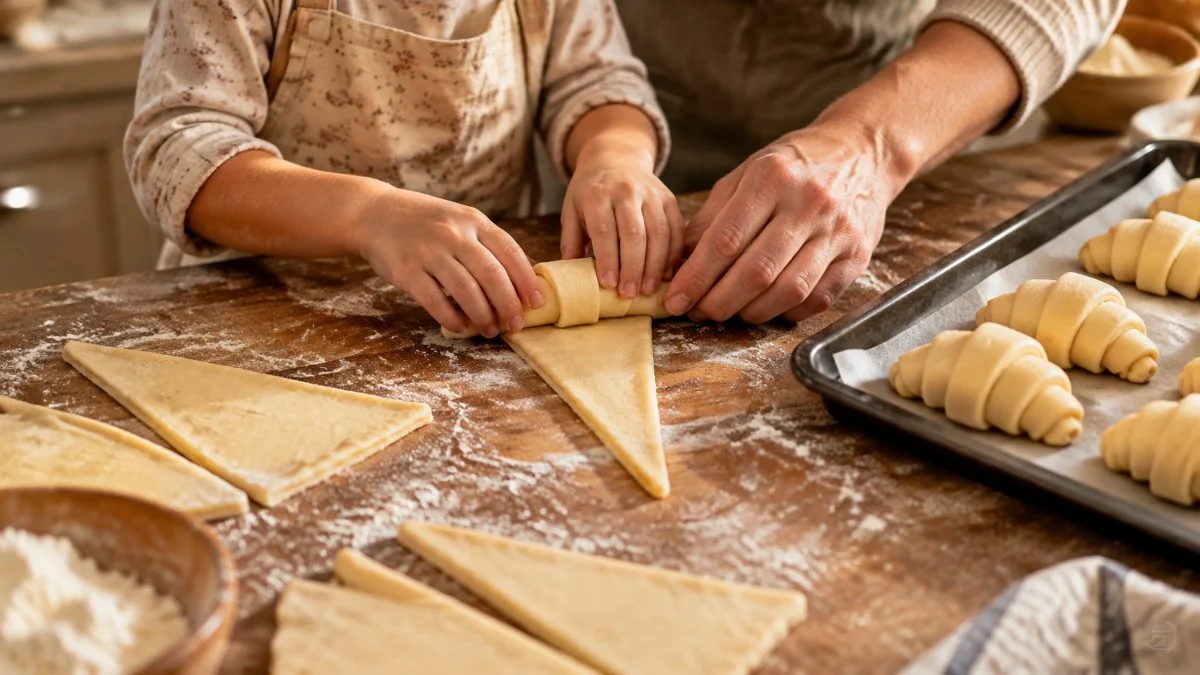
In class you see the butter slab go in, fold a dough, roll it thin, cut and shape your own triangles, glaze and bake. The chef explains the timing you cannot fit into the morning. Kaitlyn, after the croissant class with a chef: “you get to take the recipe home as well as everything that you baked.”
Then do it at home within a week or two, while your hands remember. Start on a cool day, in a cool kitchen, with a half batch.
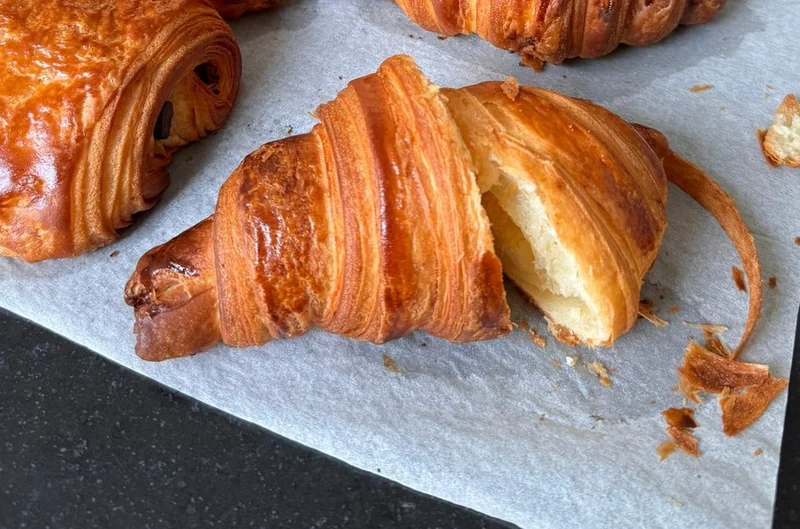
Three hours of lamination, shaping and baking with a pastry chef, and the recipe for your first batch at home.
Explore the croissant class with a chef Class detailsFrequently asked questions
How long does it take to make croissants?
About two days for the classic method: roughly 12 hours of chilling before laminating, an hour of rest after each fold, two and a half hours of proofing and 15 to 17 minutes in the oven.
Why did butter leak out of my croissants?
Usually because they were under-proofed, or proofed somewhere too warm. Proof at 24 to 26.5 °C until the croissants wobble and have grown visibly.
Can I use any butter for croissants?
Use a butter with about 82% fat or more and little water. Wetter butter breaks into pieces during the folds and gives patchy layers.
What flour is best for croissants?
French type 55, or an all-purpose flour of about 11% protein. All bread flour can make them heavy.
Ready to book
Choose your class
Free cancellation up to 24 hours before on every option. Prices are from-prices in USD and move with the season.
Croissant Baking Class with a Chef
- Hands-on class with a pastry chef, in English
- All ingredients and professional equipment
- Bi-colour croissants on selected days (pick that option)
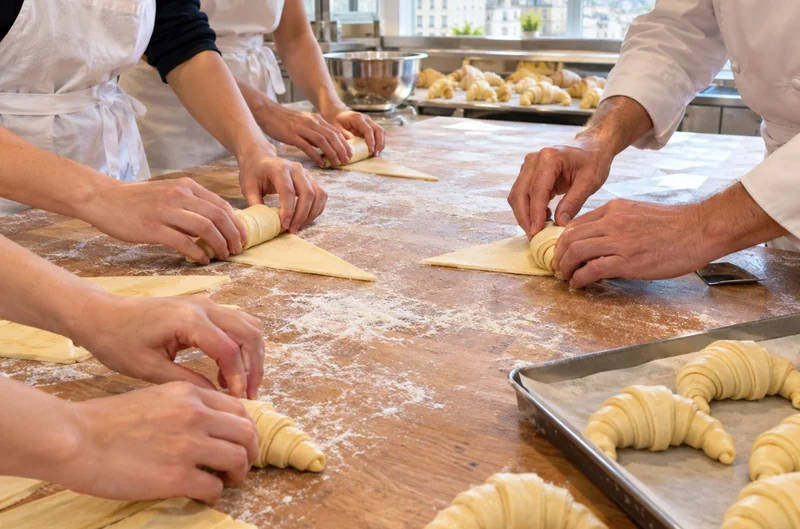
French Croissant Class in the Latin Quarter
- Lamination and shaping with a pastry chef
- Croissants and pains au chocolat to take away
- Ingredients, equipment and an apron
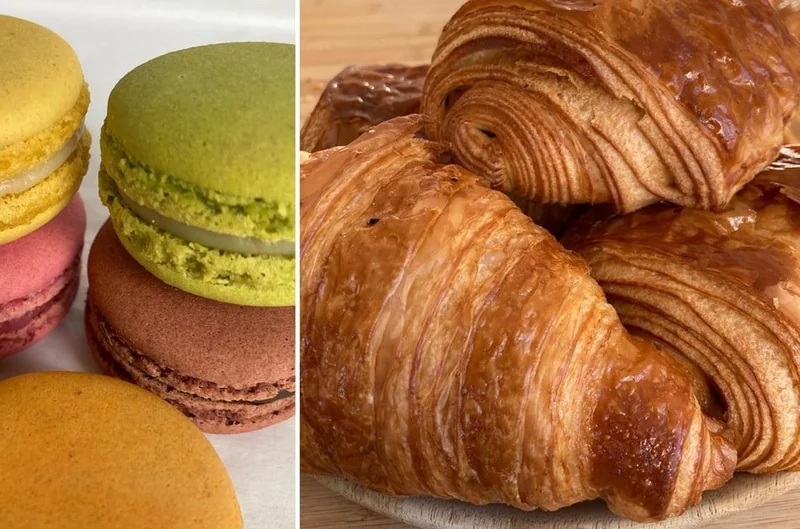
Croissant, Macaron or Tart Class near Montmartre
Six people at most, and you choose the pastry